April 2, 2026
March 31, 2026

Reading time
March 11, 2026
March 5, 2026
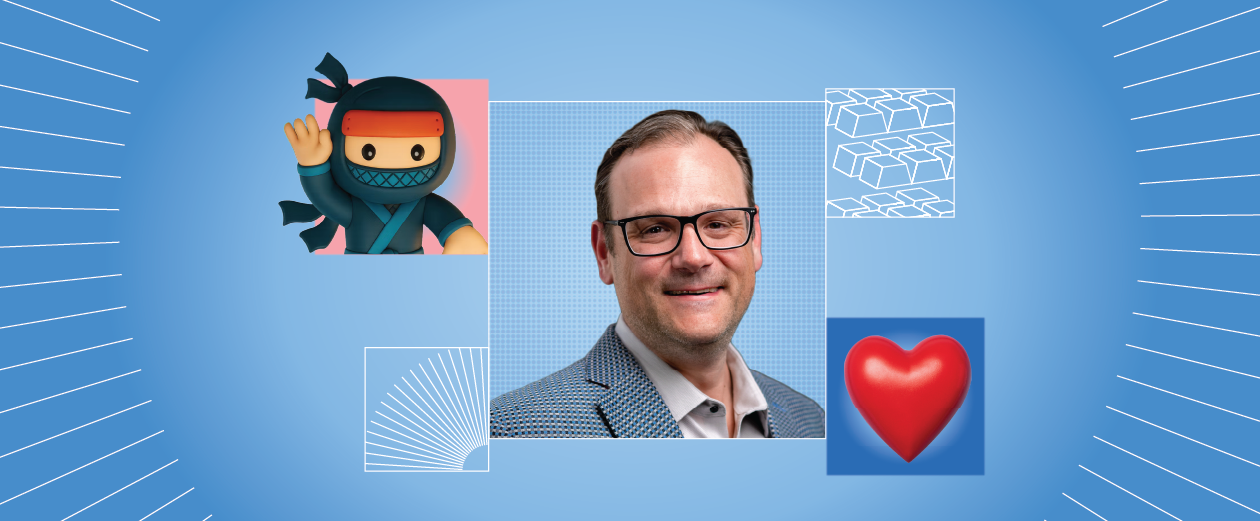
I've always been impressed by Tom Stilwell's ability to drive growth and lead high-performing teams while maintaining authenticity in a hype-driven industry, so I sat down with him to learn more about his approach. Tom brings a broadcast journalist's perspective to B2B marketing. After spending a dozen years as a broadcast journalist at NBC and TV stations in California, Oregon and Colorado, he now serves as VP of Corporate Marketing and Communications at NinjaOne. His mission: make the fast-growing IT operations platform "famous" while staying true to the storytelling principles that shaped his early career.
In this edited conversation, Tom shares his philosophy on empathetic communication, how “communications is growth,” and his approach to human-centered AI.
If you follow the data, it proves true. I've had a section in our board deck from the very beginning titled “Comms is Growth.” It ties all of these various external data points that are wrapped around moments in time the comms team has created, just to simply point out that there is hard data that links communications outcomes to growth.
This is only becoming more important now in an AI-first world. Ten years ago, we all wanted to kill press releases; and today press releases are as hot as they humanly can get because they're training the external LLMs and are a tool for traffic, engagement and ultimately growth.
Press releases are hot because they're training the LLMs.
I head up corporate marketing and communications, and effectively lead marketing with the head of revenue marketing and in partnership with the head of product marketing. The company had not invested in awareness at any considerable level before I joined 2.5 years ago. So, I like to say it's my job to make NinjaOne famous.
AI is an incredible tool but we cannot allow it to be a crutch in storytelling. As communicators, we still have to be incredible writers and storytellers no matter what. And I genuinely believe if you can’t personally write, you will fail at communications.
We have to become experts with all the AI tools at our disposal but human-created content will always perform better than AI content. The piece that started with a human will resonate more because that is where empathy will shine through. AI will try to pull empathy through but it will never do it as effectively as a great communicator.
AI will try to pull empathy through but it will never do it as effectively as a great communicator.
Great stories are about people and meant to connect with people, and you need a person to bring them to life.
The number one thing to me is empathy. Stories are about people. Empathetic people can better understand how someone is going to receive a message, a story, a visual, by putting themselves in that person's shoes.
The story. All I've ever done is storytelling my entire career. I got hooked on storytelling early and knew I wanted to be a journalist. So what I love most about my job is getting all 2,000 “Ninjas” (NinjaOne employees) to tell the same story the same way every time, and having a story that's going to resonate with the CIO of a Fortune 100 company, but also the IT technician who's working at a small managed service provider. It's really difficult to have a story that speaks to both of those people simultaneously.
A company can remain humble by ensuring that that's reflected in the company’s positioning, messaging and tone of voice. And yet at the same time, you can run an incredibly aggressive series of announcements to say to the market, "take notice." But if you do it in a tone that respects how you want the external world to see you and your company, then you maintain humility even as you are going to market in a rather large fashion.
We just repositioned the company with news that we crossed 500 million in ARR at nearly 70% year-over-year growth, that we are a leader in the Gartner Magic Quadrant, and that we're partnering with Audi Revolut F1 on their new Formula One team. We did those three announcements in a span of two weeks. We can still do those announcements and excite the market about NinjaOne, but do it in a way that remains humble and continues to put customer and partner success first. This works because growth comes from our customer’s success, not just us beating revenue targets.
I grew up in the middle of the heartland where people were digging coal or driving a semi-truck or tractor to move the economy forward, instead of creating code on a computer. My first job was on a pig farm. Growing up where I did gave me a sense of empathy to better understand how different groups of people react to what you're putting forward. So as a communicator, I feel like I'm lucky to have perhaps a better understanding of how a broader range of people will receive certain communications than others. But Silicon Valley is a strange and fascinating place. People understand things differently here.
March 16, 2026
March 12, 2026